Matrix management skills? The Capabilities Every Modern Leader Needs
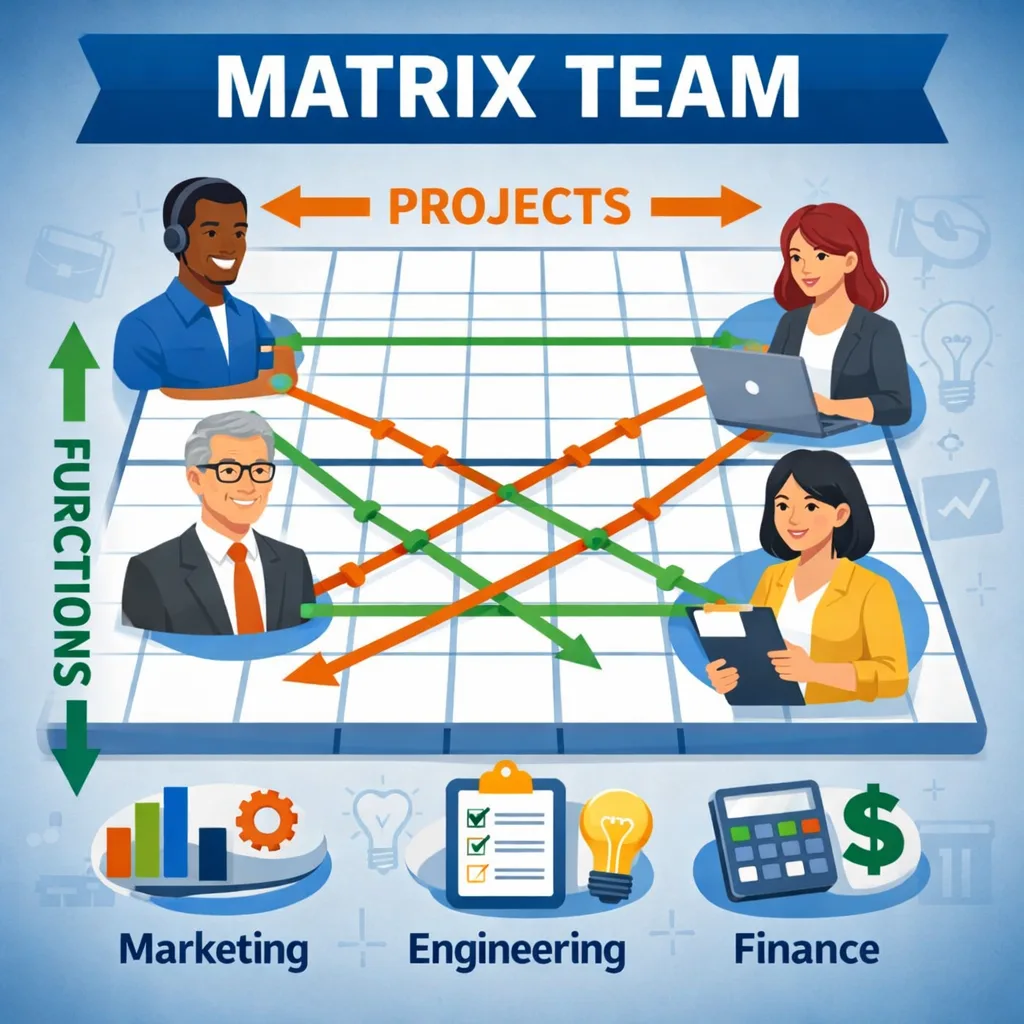
Matrix management skills are now a core requirement for leaders operating across multiple teams, functions, geographies, and stakeholder groups. As organizations evolve toward cross‑functional, multi‑team structures, leaders must navigate competing priorities, shared authority, and high collaboration demands. This article explores the most important matrix management skills, why they matter, and how leaders can strengthen them to improve clarity, speed, and performance.
What are the most important matrix management skills today?
Modern organizations require leaders to work effectively without relying on positional authority. The most critical matrix management skills include:
- Role and decision clarity — Setting expectations early and eliminating ambiguity.
- Influencing without authority — Using logic, trust, and relationships to gain support.
- Stakeholder alignment — Keeping diverse groups informed and coordinated.
- Managing collaboration load — Balancing speed with realistic capacity in multi‑team environments.
- Enterprise‑wide thinking — Making choices that benefit the whole organization, not individual functions.
- Cross‑functional trust building — Maintaining psychological safety across cultures, time zones, and distance.
These skills enable leaders to work across boundaries with more confidence, alignment, and accountability.
See more in our definitive guide to matrix management capabilities.
Why do leaders struggle without these skills?
Research continues to show that working across multiple teams significantly increases pressure on employees. A 2024 Gartner study found that multi‑team employees experience greater role ambiguity and 2× the collaboration overload of those in single‑team structures. Without strong matrix management skills, leaders often face:
- Slow or inconsistent decision‑making.
- Conflict between global, regional, and functional priorities
- Friction caused by unclear ownership
- Excessive meetings and escalations
- Lower engagement and reduced execution effectiveness
Developing these skills is no longer optional—it is central to organizational performance.
How do matrix management skills differ from traditional leadership skills?
Here is a simple comparison:
| Traditional Leadership | Matrix Management Skills |
| Authority from hierarchy | Authority from influence |
| Clear reporting lines | Shared ownership |
| Functional priorities | Enterprise priorities |
| Predictable workflows | Ambiguous, shifting workflows |
| Local optimization | System‑wide optimization |
Matrix leadership requires a shift from control to collaboration—and from hierarchy to influence.
How can leaders strengthen their leadership skills for the matrix?
Leaders can build matrix capability through several practical actions:
- Establish clarity early
Use tools like RACI or MOCHA to define accountability and decision rights.
- Develop influence and negotiation
Because positional authority is diluted, leaders must influence through transparency, logic, and empathy.
- Reduce collaboration overload
Audit meetings, eliminate duplication, streamline communication, and introduce predictable alignment routines.
- Create structured alignment
Regular, short check‑ins help teams identify misalignment early and prevent delays.
- Encourage enterprise‑wide thinking
Reward decisions that benefit the whole organization rather than local teams.
See our matrix management skill development path
What practical steps can managers take today?
- Identify your top stakeholders and clarify expectations.
- Map your most important decisions and define ownership.
- Remove low‑value meetings and redundant workstreams.
- Use “friction early” to address misalignment quickly.
- Build trust through openness, shared goals, and transparent communication.
Why matrix management skills matter now more than ever.
As organizations become more global, interconnected, and cross‑functional, strong matrix management skills enable leaders to accelerate decisions, reduce conflict, and create clarity in complexity. Leaders who master these skills improve performance at every level—and position their teams for long‑term success.
Explore our training programs to see how we can help.
Virtual Teams Training People and purpose Training Matrix Management Training Cross functional teams Training Agile & Digital TrainingEducate yourself further with a few more of our online insights:
30 years of experience learning with a range of world class clients
We work with a wide range of clients from global multinationals to recent start-ups. Our audiences span all levels, from CEOs to operational teams around the world. Our tools and programs have been developed for diverse and demanding audiences.

Tailored training or off the shelf modules for your people development needs
We are deep content experts in remote, virtual and hybrid working, matrix management and agile & digital leadership. We are highly flexible in how we deliver our content and ideas. We can tailor content closely to your specific needs or deliver off the shelf bite sized modules based on our existing IP and 30 years of training experience.
For more about how we deliver our keynotes, workshops, live web seminars and online learning.