All articles

Building trust in increasingly challenging environments

Trust is essential to the success of complex organizations, yet building trust is becoming more challenging in matrixed, virtual and global organizations with limited face to face contact. This article looks at the three phases of trust and how to build it.

Corporate Culture in M&As

A failure to manage corporate culture differences is a major source of failure and cost in mergers and acquisitions. Kevan Hall argues it should be a more significant consideration in M&A planning.

Leadership in complex companies

In the last 20 years, organizations have become massively more complex. Driven by globalization and enabled by information technology they operate in multiple cultures, locations and across timezones with highly diverse sets of employees. Matrix & virtual organizations are common with multiple reporting lines and competing priorities.

Yet our expectations of leadership have barely changed.

Save a day a week

CEO magazine article on how to save a day a week by cutting our unecessary work. (pdf download)

The Teamwork Myth

Why teamwork should not be the "sacred cow" that it is in many organizations - and some faster alternatives. (2MB pdf download)

Leave my values alone I only work here

Kevan Hall argues that true values are deeply held and resistant to change, that companies waste time trying to change values and that they should focus on some simpler shared practices instead

Distance No Object

More companies are using remote and virtual teams to get things done,. Margaret Kubicek looks at the people development challenges they face along the way.

Obstacles to high performance

How old fashioned thinking about cooperation, communication, control and community can be barriers to high performance, and what to do about it.

Breaking the chains of micromanagement

How to break out of the damaging cycle of micromanagement and low people expectations, get more done and improve job satisfaction. (3MB pdf download)

Too much teamwork?

Too much teamwork makes companies slow and expensive to run, find out why and what you can do about it. (1.8MB pdf download)

AMA Podcast Interview

Listen to Kevan Hall being interviewed on Creating Corporate Speed by the American Management Association in their innovative thinkers podcast series

Sunscribe to Kevan's Life in a Matrix podcast series here or go to iTunes and search on "Life in a Matrix"

Life in a Matrix - Alignment

An article on creating alignment in complex organization structures. This article is from our regular "tips and updates" series, sign up to receive future editions here

More interactive meetings

How can you make your meetings more interactive, engaging and valuable to the participants (1.8MB download)

Time to cut back on the 4Cs

Time to cut back on cooperation, communication, control and community so we can all get some work done. HR Management International Digest

Less waste, more speed

By wasting less time on unnecessary cooperation, communication and central control organizations can deliver faster, reduce costs and improve job satisfaction (2.4MB pdf download)

Getting things done without traditional authority

In complex companies we have to get things done without traditional line management or other forms of authority.

Influence without authority is very simple in theory but very challenging in practice, there are three key steps.

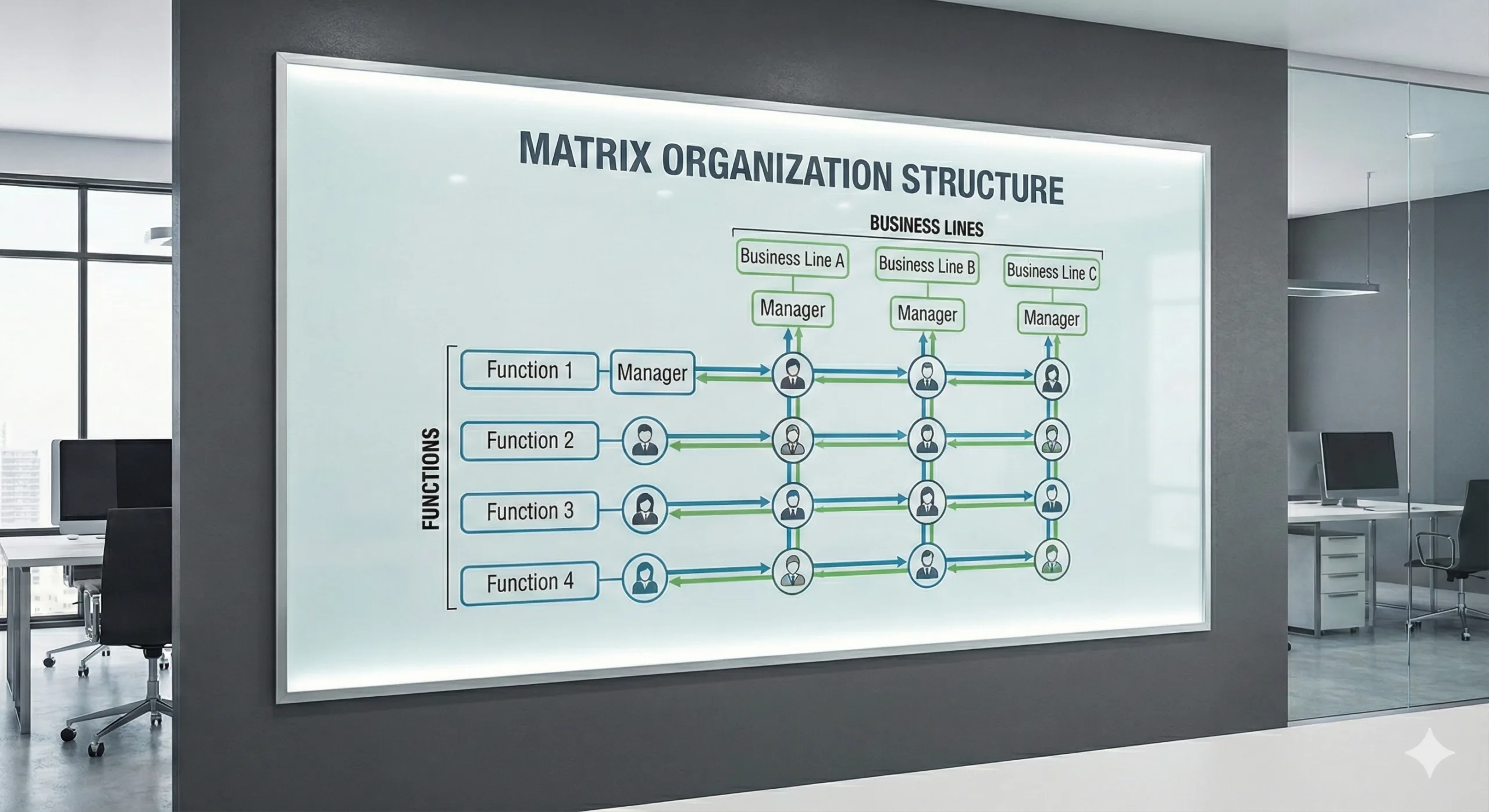
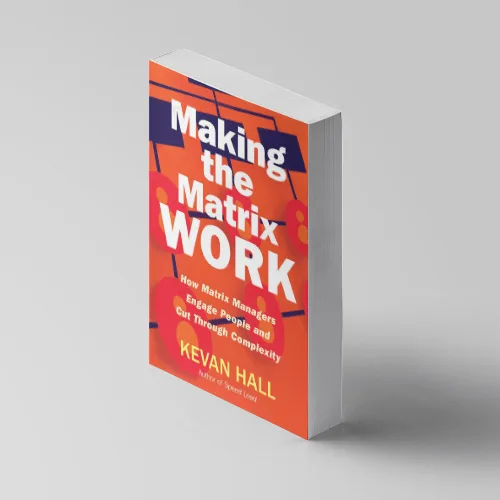
Make your Matrix really work

Making your matrix work is nothing to do with the lines on the organization chart - and everything to do with how your people operate within the structure.

See our top 3 tips here

Lack of communication, don’t make me laugh

See how lack of communication is a problem of the past, and what to do to slow the avalanche of unnecessary messages

How to make your year end meeting a hit

For many of us the year end meeting is one of the few opportunities to get face to face with our colleagues.

If you are involved in one of these meetings here are 3 things to avoid and 3 things to aim for to make your meeting a success

Why technology strangles teamwork

Even great teams slow down when team members are in different locations and work together mainly through conference calls and other communication technology.

Find out why and what to do about it

Success can make you slow

“Success can make you slow,” says Kevan Hall, author of Speed Lead – Faster, simpler ways to manage people, projects and teams in complex companies”.

”Great companies grow; they develop more sophisticated products, attract diverse people and build complicated organization structures – but this complexity eventually makes them slower, more expensive to run and less satisfying to work for.”

It does not have to be like this

An epidemic of cooperation

The average FSTE 100 Company employs 2,300 people full time to do nothing else but sit in unnecessary meetings. These meetings are just part of an epidemic of cooperation that is making large companies slow and expensive to run.

Is there such a thing as Global leadership?

How can you be an effective global leader when your followers around the world have very different expectations in the leadership style they prefer?

Time to pay less attention to the leaders and more to the style of “Followship” we need.

Out of date expectations?

We have high expectations of our managers. Read any management book or attend a training program, you will see lists of criteria and skills that make managers look like superheroes. But are these expectations both out of date and actually damaging people development?

A "lack of communication"?

Nearly every business and team problem is put down to a “lack of communication”.

In complex companies the problem is likely to be too much communication, not too little.

Read our tips on what to do about it.

IT Leading the Global Charge

IT professionals are often first in line when companies start to integrate their international business operations or move work overseas, and this is not always a comfortable place to be!

25% Faster Teams & Projects

A well run "kick-off" can speed up the delivery of your international team or project by 25% or more. Learn why and how in our latest article.

Making real decisions in International meetings

Do you ever take part in international meetings where people say “yes” when they mean “no”? Where you thought you made a decision but nothing happened after the meeting? Cultural differences may be part of the problem.

When being too helpful is a management failure

Do your team members call you every day for advice, answers to problems or support? It is nice to be popular but this may be a sign that you have not given your people the information, confidence, skills or authority to deal with problems for themselves.

Planned spontaneous communication

How can we recreate those "water-cooler moments" of spontaneous communication when we work in remote teams. If we do not, then there is a risk that I only call when I need something or have a problem - the answer is planned spontaneous communication

Acessibility

When we ask people what they want from their global managers, "accessibility" is always high on the list.

But what does accessibility really mean?

Are You Being Served?

The type of service you experience in the air is determined by your cultural background

Fly By Phone

When someone is 3,000 miles away, how do you tell him his work is not up to scratch?

Global Division

As organisations become more and more global, both employees and managers are drawn into international projects.

International Matrix Management

Many international organisations have introduced some form of
organisation structure involving two or more lines of reporting – a matrix.

Understanding The Big Picture

If you heard that a colleague had been spotted wandering around Paris, mobile phone in hand, reading the inscriptions on the Arc de Triomphe, and loitering around in the Louvre, you might be hard put to believe that it was all in the interests of meeting the global challenge

Global Warming

International supply chains are increasingly common but merely imposing your practices on other business cultures can be very destructive.

Building a truly Global HR Organisation

Globalisation is a major challenge - no more so than for HR people, who often find themselves torn between local loyalties and central processes. New research from Global integration shows the particular challenges of building a truly integrated international HR function