Trial By Trust

Kevan Hall, CEO of Global Integration,  discusses why trust is a good barometer of a healthy, well managed team

Organizations with high levels of trust innovate faster and find it easier to attract and retain top talent. Job satisfaction, commitment and loyalty are closely aligned to perceptions of trust. Trust is a critical element in an organization’s culture. Trust is vital to management credibility, workforce loyalty, creativity, challenge and open communication. So why do we pay so little attention to it?

When trust is lacking, employees’ performance are affected, loyalty is compromised and a culture of low morale results, significantly reducing the overall success and prospects of an organization. Yet the many specific benefits achieved by high levels of trust include lower transaction costs (the costs of checking and monitoring relationships); increased willingness to share information and knowledge; greater willingness and confidence to take risks when dealing with ambiguity and to come up with creative solutions; and faster responses through empowered, decentralized decision making.

Ironically in a more networked, social world, building trust is becoming more challenging. Trust has been reducing consistently since the 1950s and well-publicized international business scandals in recent years, including Enron and WorldCom, have led to an overall reduction in trust in business.

With yet more stories of large-scale fraud emerging, the challenge is set to become bigger still.

Read the rest of this entry »

Divided Loyalties and the Keys to Community

Kevan Hall, CEO, Global Integration discusses one of the key challenges of matrix working and operating virtual teams: creating community

Community building takes hard work

Having a sense of community and trust is a key success factor in today’s complex companies and teams. Community reduces barriers to cooperation. Community speeds up the way people work together. And community can make people less averse to change.

Community was once a by-product of location. Given the choice people naturally tend to form a community with people who are physically close to them and socially similar. Today’s work communities include colleagues from other cultures and other locations and we are required to build virtual communities and demand trust through technologies like email, just because they work for the same company.

In the multi-site businesses common today, let’s not gloss it over: it is expensive and difficult to build community. Managers often feel that a sense of identity or team spirit is missing. Building a deep and enduring sense of community and trust does not happen quickly. It takes time and requires a lot of face to face contact. It is surprising that it works at all.

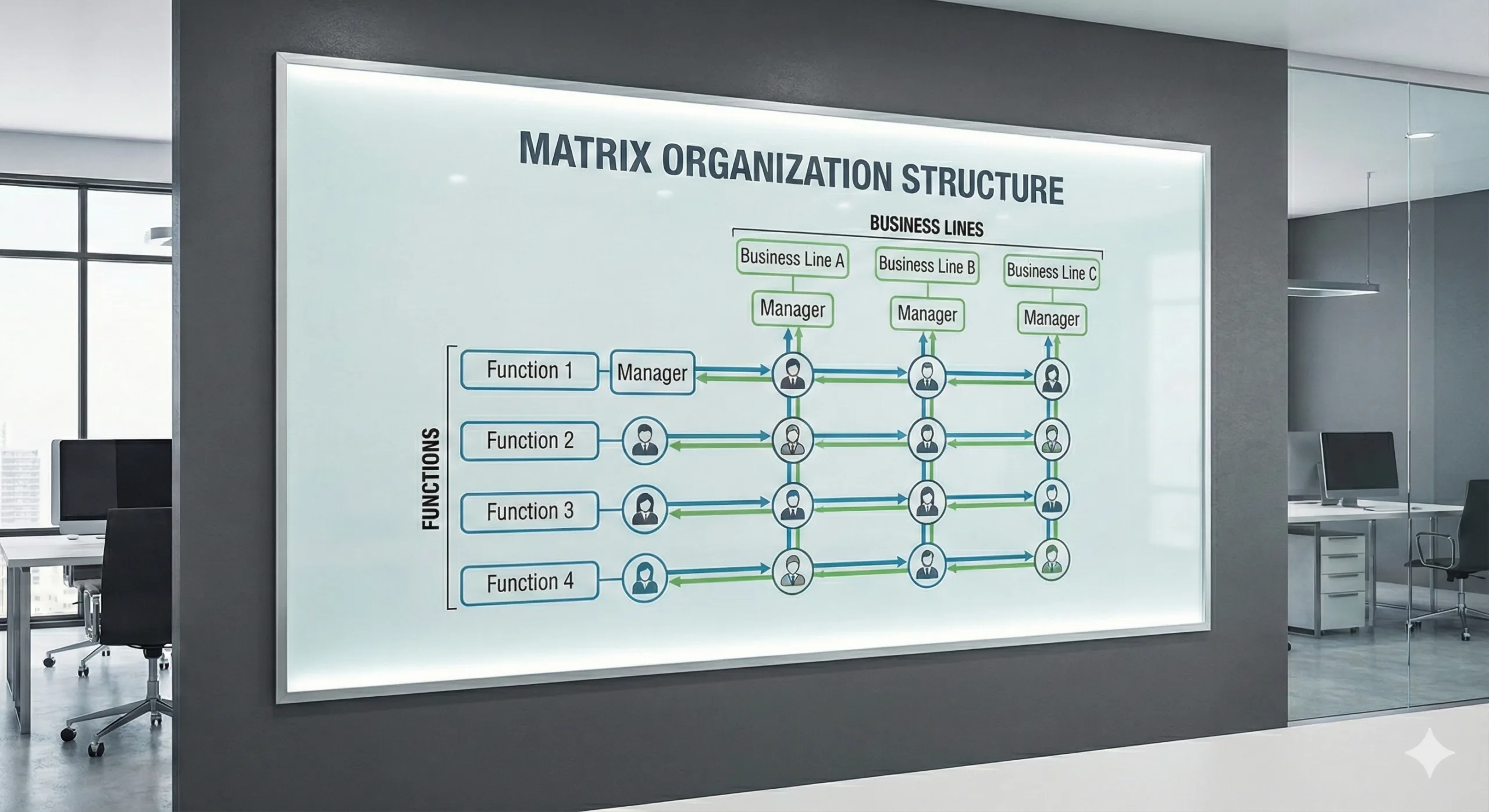
People are often pulled in different directions by competing priorities, multiple reporting lines and rapid change. Organisations often respond to this by introducing a matrix type organization structure. Whilst different reporting lines to geography, product group, functions and so on can create a structure of excellence, the resulting divided loyalties can present a problem.

Read the rest of this entry »

Guest post: The Restaurant at the End of the Virtual Universe

Guest post by Jyri Kuokka, Technical Communications Assistant, KONE Corp./KONE Training and Documentation

Jyri Kuokka is the current Technical Communications Assistant at KONE Training and Documentation as well as the vocalist, guitarist, and primary songwriter behind the Finnish heavy metal act The Fathomless Deep. Jyri has a BBA in Management and Human Resources from Pacific Lutheran University (in Tacoma, WA) and a QBA in Accounting and Finance from Helsinki Business College in Finland.


Jyri Kuokka, Technical Communications Assistant, KONE Corp.


Virtual Trainer Skills is an exciting new course at KONE. It coaches trainers to train virtually without forgoing the level of engagement perhaps more easily attainable with face-to-face teaching.

VTS exists because virtual training exists; a simple fact, but the reality in most large organizations is that virtual training is not only employed, but encouraged. It is, or can be, an effective means of teaching a large number of people across the globe, without the costs of travel or arranging a learning facility, or the cost in terms of time needed for organization and administration.

As a learning platform, virtual training can be a difficult craft, as trainers may feel distant from their audience, or find true contact impossible. Tony Poots, our VTS instructor, discusses the key challenges, most common mistakes, and the solutions, which, as he analogizes, are not entirely unlike handling customers at your restaurant.


A difficult meal to prepare. The key challenges in virtual training

Imagine going to a restaurant, being taken to your table, but no further. Nobody has given you a menu, let alone something to eat. Beyond a shadow of a doubt, you would not feel like eating there. The same trap fall exists in virtual training. Tony Poots explains: “The key challenges are engaging people, keeping them engaged, and getting the content right. Human beings are really designed to be face-to-face creatures so when we engage one another in a conversation or training it’s about the words we use, it’s about the content, it’s about your voice, it’s about movement, and interaction between us at a physical level.”

Tony continues: “So, the key challenge is how you engage people when all you’ve got is your voice and something happening on the screen and you don’t have eye contact, you don’t know what people are doing, and they’re not really getting to know you. The other major challenge area is getting the content right to ensure that you don’t spend your whole time in some kind of one-way death-by-PowerPoint activity and do something, which is actually very practical and useful for people that they can’t get from simply reading a book.”

Poor nutrition – The most common mistakes in virtual training

“The most common mistake people typically make is lack of interaction. For some reason, either [trainers] think that creating true interaction is impossible or because they themselves feel quite remote from their audience,” he comments.

The second mistake often occurs as a result of or in conjunction with the first. “[Trainers] forget about the need for interaction, which leads them into the second biggest mistake, which is talking at people, rather than discussing with them.”

Read the rest of this entry »

On the search for performance

Lotus 77 Formula One car – as driven by Andretti

Kevan Hall, CEO, Global Integration, contends that our people management practises are holding us back.

Over the past decades, organizations have invested heavily in information systems and process reengineering to improve business performance.Many operate several business lines across multiple sites and time zones, in virtual teams, and employ highly diverse groups of people.

This organizational complexity often eventually undermines the performance that created the company’s successful in the first place. Entrepreneurial spirit erodes, bureaucracy increases and progress slows.
Read the rest of this entry »

Dare to Disconnect

By management and leadership expert,  Kevan Hall, CEO, Global Integration

So August is over. When you came back from your holiday, relaxed and tanned, to find 600 e-mails waiting for you, you doubtless felt you needed another holiday to cope.

So here’s a thought: delete the lot! Virtually all of them will have resolved while you were away and the urgent ones will call you anyway.

A year ago a small survey we undertook at Speedleading.com revealed that people receive an average of 58 e-mails per day, of which only 43% are necessary for them to do their job.  This means that on average a person who has gone away for a two week holiday can expect to find nearly 600 e-mails waiting for them on their return – unless they take an  e-mail device on holiday, being constantly distracted from enjoyment and relaxation.

I recommend letting people know you will be away and that you will delete any emails sent when you are away (using the auto-respond message on your email system). This can annoy some people  -  if you are worried about it,  just quietly implement the policy yourself.

If that’s too drastic, a less risky alternative is to sort all the e-mails you receive by name and only call your boss and people who have sent more than five emails – not to discuss the mails but to ask them ‘What happened while I was away?’ People will call back if their mail was urgent.

Read the rest of this entry »

Maintaining workplace diversity

Post on the need for wider cross cultural training by Kevan Hall, CEO, Global Integration

HR departments work hard to ensure recruitment diversity, particularly where it’s legislated for, but the next big challenge is to maintain diversity. Whilst HR departments work hard to recruit, if those employed don’t fit comfortably into the corporate culture, they may be quick to change/assimilate, or move on.

There are some very easy ‘external’ wins for some cultural difference – changing policies on dress codes, ensuring that appropriate bathroom facilities are available, and so on. However, whilst these things may smooth a transition into the workplace, keeping people there is a bigger challenge.

Encouraging diversity and maintaining it are two very different challenges.

Many organizations, and even departments within them, tend unwittingly to develop a corporate culture which assimilates difference.

Read the rest of this entry »

How architecture influences work behaviour

Post by Kevan Hall, CEO, Global Integration

An interesting UK TV programme on Channel 4 last night – The Secret Life of Buildings – Work – explored the impact of architecture on motivation, control, etc… Whilst it was a bit evangelical – not everything about trust and control in organisations is caused by the design of the buildings – it was an interesting set of ideas and illustrations.

Architecture can both mirror and mould a corporate culture. (Having said that, a great corporate culture can produce trust and productivity in a lousy building – whilst the opposite is unlikely to be true.)

One point they did not address was how work environments can support virtual working. Open plan offices can be very noisy for people who are working through technology such as audio conference or video. If individuals are more connected in their work with people in different locations, then the design of their space around should reinforce their ability to connect individually with people in different locations. I’ve not seen any research that focuses on this challenge.

If you’re based in the UK you can probably see the Channel 4 episode on E4 OnDemand.

On RACI

RACI rarely works in matrixed teams

Organizational charts in highly matrixed environments look more like spaghetti than building blocks

Trying to seek order where there is none, seeking to understand ‘how it works’, is a fairly human reaction. For people working within matrixed organizations, it’s fairly natural, therefore, to try and map processes or structures.

But for most networked or matrixed organizations this is such a complex task that by the time you have finished the whole thing’s changed, and there are so many ‘ifs, buts and maybes’ that the whole thing becomes pointless.

One of the most commonly used tools by people trying to understand a matrix is RACI, a methodology which looks at who is Responsible, Accountable, Consulted and informed about any given project.

The Responsible person does the work  -   typically a single person (who may in turn have people responsible to them.

The A is for Accountable (sometimes Approver or Approving Authority are used) and is essentially the person who is answerable for delivery/non-delivery/

C is for Consulted (Some companies often use Counsel in place of consult) – the topic matter experts whose advice, expertise and experience feed into a project.

And I is for Informed – the people who need to know what’s happening.

Read the rest of this entry »

Ramadan: Five pointers for non-muslim work colleagues

Cultural awareness: RamadanCross cultural awareness: Ramadan

When work colleagues are celebrating Ramadan, which this year starts today (August 1, 2011) people from other cultures can find it hard to know what the right protocol is, and are often too afraid of causing offence or showing ignorance to ask.

The ninth month in the Islamic calendar, Ramadan marks a month of fasting, refraining from food and drink during daylight hours for Muslims. The date changes every year based on a moon cycle, and it’s the biggest event on the Muslim calendar.

It has parallels with other religions, such as Yom Kippur in the Jewish religion, or Lent for Christians. For devout Muslims it is seen as obligatory and is a very spiritual time, so fasting is combined with rigorous prayer. It is a way to demonstrate self-discipline, patience and spirituality – very Muslim qualities – and a time for charitable acts.


Islam is a rich culture, with as many adaptations and as much personal practise as other religions, but despite the fasting, for most Ramadan is a time of celebration rather than one of hardship.

Read the rest of this entry »

Lessons from sports and other worlds

Article by Kevan Hall, CEO, Global Integration. He leads his own cross cultural and remote organization and has clients and suppliers around the world, as well as offering consultancy and training to build the people capability to make complex organizations faster, less expensive to run and more satisfying to work in.

I received an invitation today to attend a HR conference where I could listen to three leading figures from the sports world on what business has to learn from them.

Whilst all three are interesting and inspirational figures and there may be some parallels between motivation and management in sports and in business, there are also some huge differences.

In sports they usually deal with highly motivated, and often very well-paid individuals. These individuals have committed to a particular sport or activity at an early age and most have a passion for what they do. Many are also very insular and self-obsessed.

Read the rest of this entry »

Page 8 of 41« First...678910...203040...Last »